Lost on the trail? Seek the map

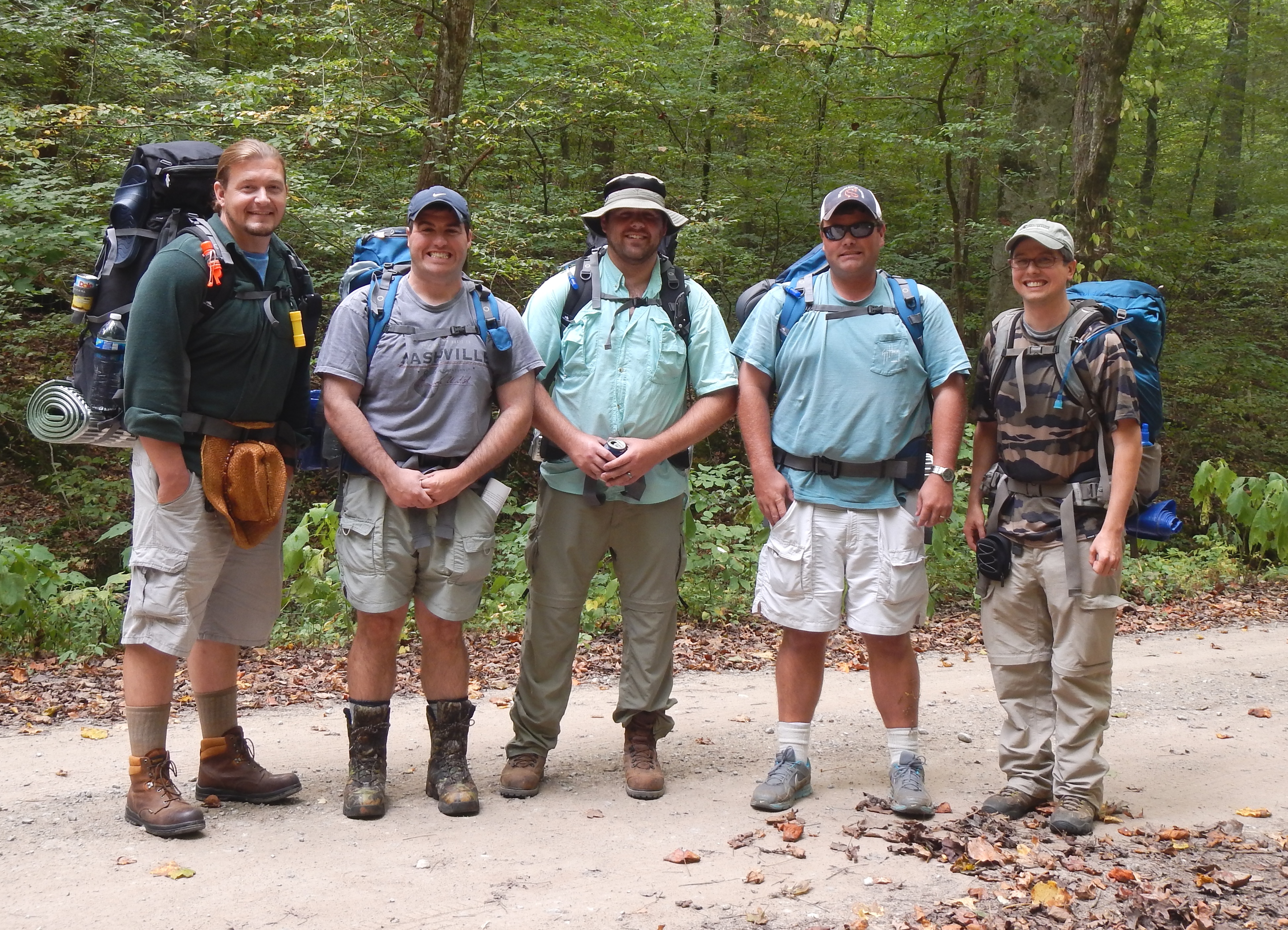
The group for the Fall 2014 Sipsey trip.

The group for the Fall 2014 Sipsey trip.

It happened suddenly, silently and without warning. We missed a sign and veered onto the wrong trail.

We were early into our overnight backpacking and Bible study trip in northwest Alabama’s Sipsey Wilderness with some guys from my former Bible study group. This trip in late September was only my second time in the Sipsey and the first time at Thompson Trailhead. Our plan was to follow Trail 206 along Thompson Creek and continue east on Trail 209 along the Sipsey Fork and explore the Bee Branch area before turning around and heading home the next day. These are all official and well-worn paths.

That was the plan. But about 15 minutes into the hike we reach a campsite and an apparent crossing of the then bone-dry Thompson Creek. There are no blazes to mark the official Sipsey trails, only signs at pivotal intersections on official trails. To further complicate things there are many “unofficial” trails made by hikers over the years. These trails are unmaintained and not recognized by the U.S. Forest Service, but they are easy to confuse with official trails if you are not careful.

On this hike, we missed a turn across Thompson Creek very early and took us on a 4 or 5 mile detour on a faint “unofficial” path up an area called White Oak Hollow. We were never in any danger and it ended up being a fun side adventure, but it served as an important spiritual reminder to me.

We followed a creek bed for about 30-45 minutes through some beautiful canyons, but the narrowness of the path and amount of overgrowth gave me the sneaking suspicion that this was not the well-traversed Trail 206.  Still, we walked on, hopeful to find a sign we were on the right path.  As we ascended a ridge, I was encouraged to see bright orange tape marking the trail as it briefly joined a faint road and jogged right back into the woods.  Someone had been here before! Continue reading

Sign up now available for men’s overnight backpacking in Cheaha Wilderness Nov. 7–8

Sept 1_Wordpress

This is a two-day, one-night adventure to the Cheaha Wilderness Friday, Nov. 7 – Saturday, Nov. 8 that combines hiking and camping along the trail with Bible study. We’ll unplug from technology, seek some adventure, hang out by the campfire and spend some time with God in His wilderness.

No previous backpacking experience is required. This is a perfect starter trip. Even better, we’ll loan you all the basic gear you’ll need, including backpacks, backpacking tents, compact sleeping bags and sleeping pads.

We’ll hike the 10-mile Odum Scout Trail route traveling along the Pinhoti from the Cheaha Trailhead  and stopping on Friday evening to camp at scenic McDill Point. On Saturday, we’ll continue along the Pinhoti to the Caney Head trail intersection and pick up the Odum Scout Trail to the High Falls Trailhead. The hike is a total of about 10 miles of hiking split over two days.The trail is easy enough that anyone in halfway decent shape should have no problem.

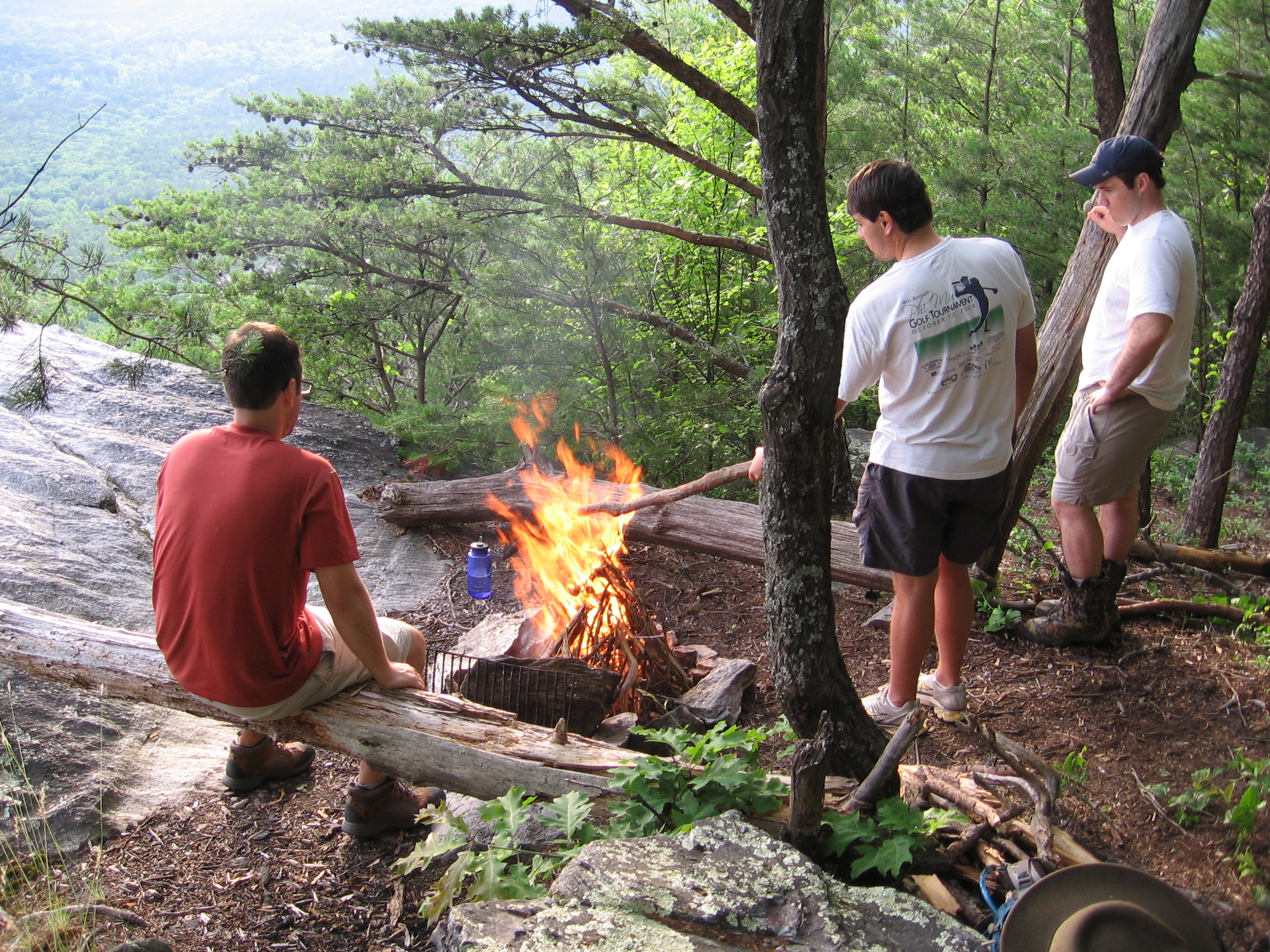
Reboot participants build a campfire near McDill Point in the Cheaha Wilderness.

Camping near McDill Point in the Cheaha Wilderness.

We will leave Montgomery around 11:30 a.m. on Friday morning and return late Saturday afternoon.

There is no cost for the hike; however we ask that you contribute $15 to a pool for gas money and group dinner expenses. We’ll have a pre-trip meeting the Sunday before the hike to go over all the details and get your loaner gear to you.

Space is limited to eight men.

Click here to fill out a quick sign-up form and reserve your spot.

Have questions? Contact Reboot leaders Mike Presley, Chris Bowden and Adam Causey at rebootwildernessadventures@gmail.com.

Image

More details coming soon…

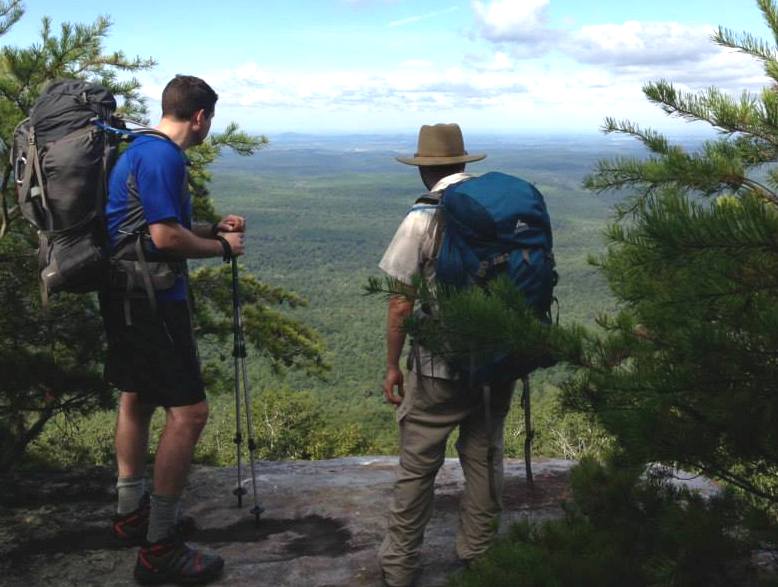
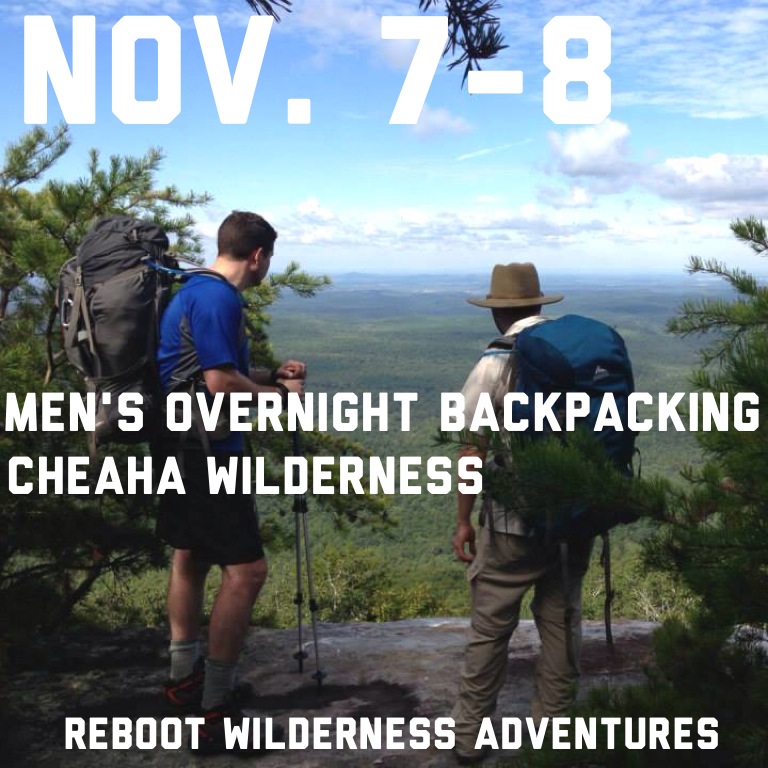
November 2014 Cheaha announcement photo

‘I just want to be happy,’ or what being dad to a toddler is teaching me about perspective

Easter 2013 meltdown

Easter 2013 meltdown

Since Father’s Day last month and my son Benjamin’s birthday last week, I’ve been thinking about how being a dad has given me a little better understanding of the patience God as our Father has with us, His children. One example in particular struck me.

Benjamin is a joy to be around and I’m so proud and honored to be his dad. He truly is a gift from God. He’s funny, he’s smart and he has a great imagination. However, as with any 3 year old, we are always only minutes away from a meltdown over something very minor like “I wanted to flush the potty,” “I don’t want to take a bath,” or “I want to wear the Superman shirt” even though he wore it all day yesterday and got dirt, sunscreen and food stains on it. (He would wear that Superman shirt for 100 days straight if he could).

Usually in the middle of a tantrum he says, “I just want to be happy.” It’s hard not to laugh but we try to patiently tell him that he can be happy and that what he is upset about is no big deal. We get him to stop, take a deep breath and calm down. It usually works and he is just fine a few minutes later.

As parents, it’s easy for Amy and me to get frustrated because we can easily see that 99 percent of time what he is upset about is very temporary and is no big deal in the grand scheme of things.

But that got me thinking, isn’t that how we often act toward God when we don’t get recognized for good work, when we feel like no one cares, when things don’t go how we expected, or when we are facing a challenge?

We lose perspective and think the world is ending because we are facing a challenge that maybe God is using to grow us and strengthen our faith and dependence on Him. We let fear and anxiety take control and basically throw up a prayer, saying in so many words, “I just want to be happy.”

All the time, God is like the ever-patient parent who sees the big picture and says “Everything is going to be OK. Just take a deep breath, trust in Me and follow Me.”

“Don’t let your hearts be troubled. Trust in God, and trust also in me.” – Jesus in John 14:1 NLT

Walking on water through the storms of this world

BigSurWaves

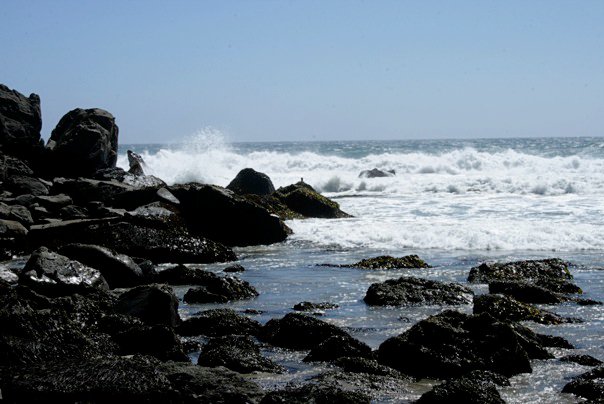
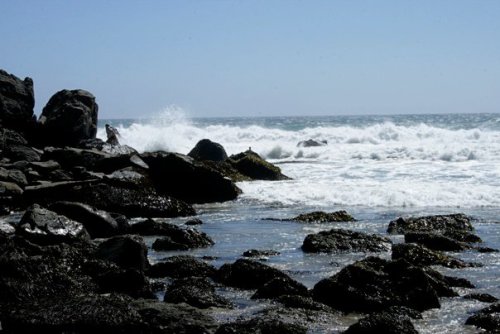
Pacific Ocean waves crash into the shore in Big Sur, California.

I tend to value comfort, safety and security for myself and my family. Of course those aren’t bad things, but I think sometimes we can rely on them too much and miss out on a deeper calling from Christ.

God is definitely using a period of transition my wife Amy and I are walking through right now after Amy’s job loss to challenge that tendency in me and to help me grow to trust that Christ alone is enough. To teach me that as long as we seek Him and trust in Him, He will lead us and provide for us. Of course, that’s easier said than done and it’s an everyday surrender for me, but He is revealing a lot to us in this period.

Something I shared on Reboot’s Sipsey Wilderness trip back in May is continuing to resonant strongly with me. It’s the story of Peter walking on the water with Jesus. I want to share it here not only as a testimony but also because it might help you if you find yourself in a difficult situation.

The story in Matthew 14 takes place right after the feeding of 5,000+ with the miracle of loaves of bread and fish.

Right away Jesus made the disciples get into the boat. He had them go on ahead of Him to the other side of the Sea of Galilee. Then He sent the crowd away. After He had sent them away, He went up on a mountainside by Himself to pray. When evening came, He was there alone. The boat was already a long way from land. It was being pounded by the waves because the wind was blowing against it.
Early in the morning, Jesus went out to the disciples. He walked on the lake. They saw Him walking on the lake and were terrified. “It’s a ghost!” they said. And they cried out in fear.
Right away Jesus called out to them, “Be brave! It is I. Don’t be afraid.”
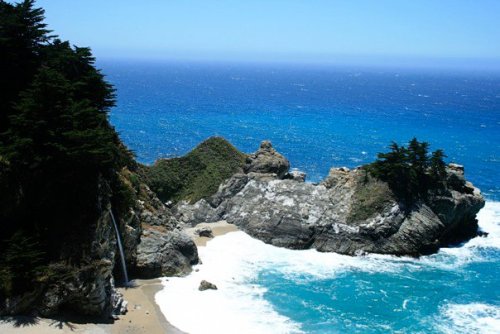
Julia Pfeiffer Falls and the Pacific Ocean in Big Sur, California.

Julia Pfeiffer Falls and the Pacific Ocean in Big Sur, California.

Life is easiest in the boat. It’s relatively safe and secure, and you know what to expect. We know that it will float and provide safety and shelter. Even when the wind and waves of life start to batter you, it is easier to try to stay in the boat and protect yourself.

Think about how easy it is to “stay in the boat” in our own lives. It’s familiar, and we are comfortable. Most of the time my job, my home, my routine and my ministry are like the boat. I’d rather stay in it than have the faith to step out when Jesus and the Holy Spirit call me to something deeper and probably a little uncomfortable for an introverted creature of habit like myself.

Peter’s response to Christ is a key piece to this:

“Lord, is it You?” Peter asked. “If it is, tell me to come to you on the water.”
“Come” Jesus said.
So Peter got out of the boat. He walked on the water toward Jesus.

What takes faith is swallowing your fear and responding to Christ’s invitation to get out of the boat and trust in Him above our feelings and circumstances. Peter was bold enough and had enough faith to ask Jesus and step out of the boat onto the water with Him. As a result, Peter did the impossible by human standards – he walked on water.
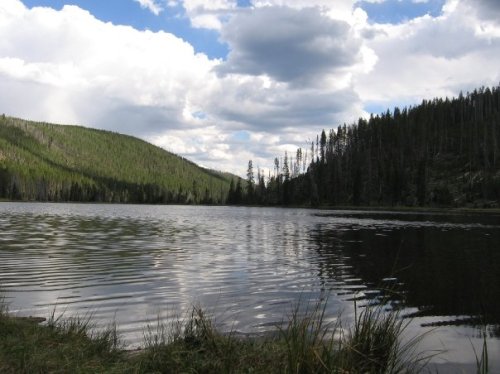
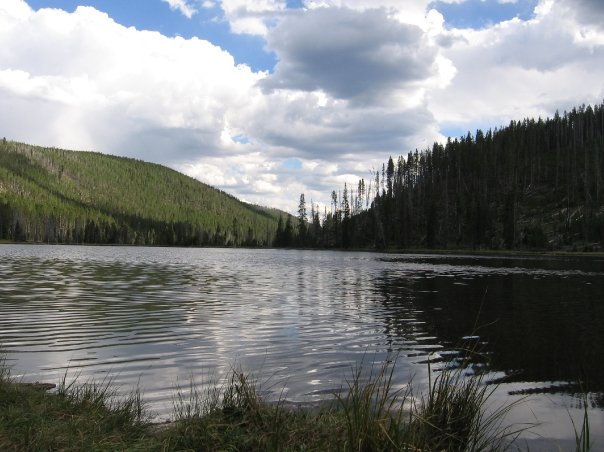
A mountain lake at Yellowstone National Park.

A mountain lake at Yellowstone National Park.

After stepping out of the boat onto the water, Peter was fine as long as he focused on Jesus and not the circumstances around him, but look what happens when he momentarily takes his eyes off Jesus.

But when Peter saw the wind, he was afraid. He began to sink. He cried out, ‘Lord! Save me!’
Right away Jesus reached out His hand and caught him. “Your faith is so small!” He said. “Why did you doubt me?”

Jesus didn’t change, but Peter’s immediate perspective of the situation with the wind and the waves led him to doubt and sink. I do this so much in my own life. I lose sight of Jesus in the midst of immediate circumstances and let fear take control. I hear Jesus say so often, “Why do you doubt me?”

What I’m learning through this period is that it takes great faith to answer Jesus’ call and to trust in Him, to focus your eyes on Him instead on the storms of job loss, fear, doubt, sickness, etc. raging all around us. Believe me, this is easier said than done. For me, it is really taking the daily attitude that Christ is enough and surrendering control to Him daily through prayer and reading the Bible. He knows our needs and He is God. We just have to seek Him and trust Him and believe that He is God. We have to believe that He is truly enough and that He will lead us to where He wants us to go.
A journey into the heart of the Sipsey Wilderness

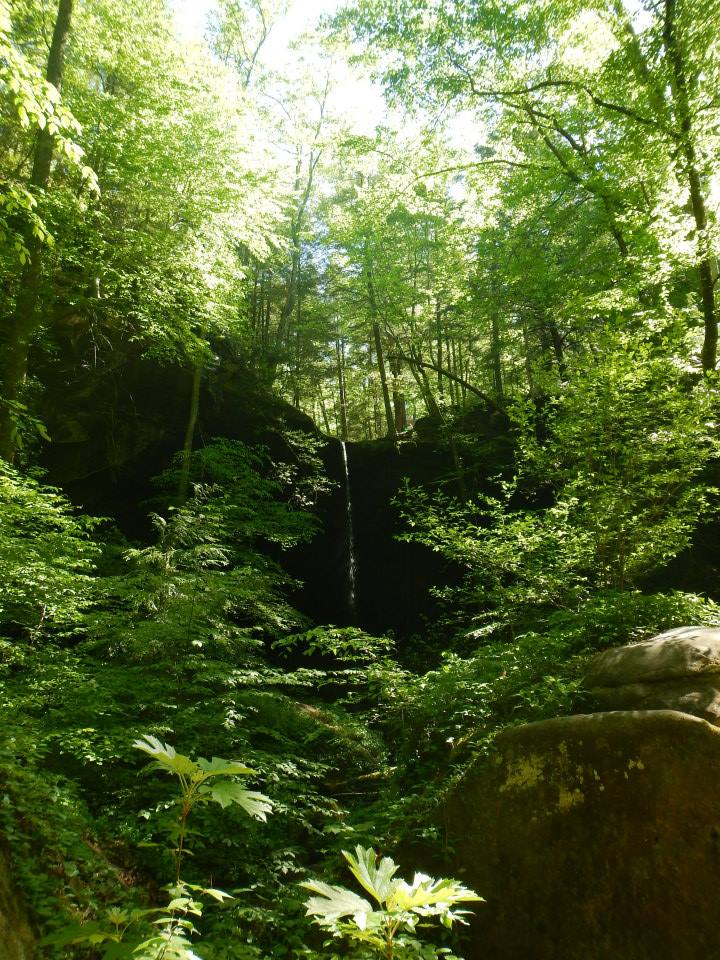
East Bee Branch Canyon

East Bee Branch Canyon

Magical. If one word could describe the feeling of entering the lush forest, steep canyons and clear streams of the Sipsey Wilderness for the first time, that’s it. There is just a special feeling about the place.

In early May, Reboot had the privilege of leading a group of guys on a 14-mile overnight backpacking/Bible study trip through the heart of the Sipsey Wilderness. The area, located in Bankhead National Forest in Lawrence and Winston counties, is named for the Sipsey Fork of the Black Warrior River. The Sipsey is Alabama’s only designated Wild and Scenic River and the wilderness area more than lived up to its reputation of a wonderland of waterfalls, clear blue waters, old-growth forest and towering limestone cliffs.

After a three hour drive from Montgomery, we arrived at our starting point: the Sipsey Picnic Area trailhead along Cranal Road. Our hike was a there-and-back trip to the East Bee Branch Canyon and the “Big Tree,” one of the wilderness’s most famous highlights.

Our group in front of the Big Tree.

Our group in front of the Big Tree.

Our path set out from the Sipsey Picnic Area trailhead along Trail 200/209 and crossed the clear and cold waters of Borden Creek to reach Trail 209 which follows the Sipsey Fork and would be our main trail for the hike. The slow flow of the Sipsey bluish waters was our constant companion once we crossed Borden Creek. Fall Creek Falls was an early highlight along with the sight of dozens of butterflies attracted to something left behind in a fire pit near the falls. The hiking was smooth with very little elevation change. The biggest challenge was navigating several tree blowdowns and hopping over the numerous streams that feed into the Sipsey.

Continue reading

Seeing God in America’s National Parks

Note: I wrote and posted this piece on my Facebook page back in fall 2009, right before the premiere of “National Parks: America’s Best Idea.” This was several months before going on my first backpacking trip and long before starting Reboot. I stumbled upon it recently and found it interesting that the main idea behind this idea is at the center of Reboot. It’s interesting to look back now and see how God had already been working in my heart about connecting to him through nature with many of the distractions of the modern world removed.

West Thumb basin at Yellowstone National Park.

West Thumb basin at Yellowstone National Park.

Starting Sunday, PBS is airing the newest Ken Burns documentary, “National Parks: America’s Best Idea.” I am really excited to see the documentary because I agree wholeheartedly with the title. I am thankful that our ancestors had the wisdom and foresight to preserve these amazing wilderness areas for “the benefit and enjoyment of the people” instead of commercialization. It got me thinking about something:

I love technology as much as the next person. I check my e-mail about 900 times a day it seems. My cell phone is always on, and I love keeping up with friends on Facebook. But our increasing reliance on technology leaves us disconnected with something that is around us but seems too often forgotten: Nature.

Many times I never felt closer to God than I have when out in nature marveling at His creation. My favorite place in the world is Yellowstone National Park where it is routine to find hiking trails blocked by herds of buffalo, come upon a bear or moose grazing for food near the road and see geysers shooting hot water thousands of feet in the air or hot springs colored deep blue and brilliant yellow from microscopic algae . That’s not to mention the miles of lodgepole pine forests, an immense lake, a canyon whose beauty is only surpassed by the Grand Canyon and several peaceful, grassy valleys carved by glaciers that give way to rugged mountainsides.

Continue reading

Going outside is good for your physical, mental and spiritual health

It is pretty obvious that spending some time in the outdoors is good for your body. But while preparing for our spring Reboot trips recently, I realized that the benefits of exploring nature extend far beyond your physical health.

Time in the outdoors improves your physical health
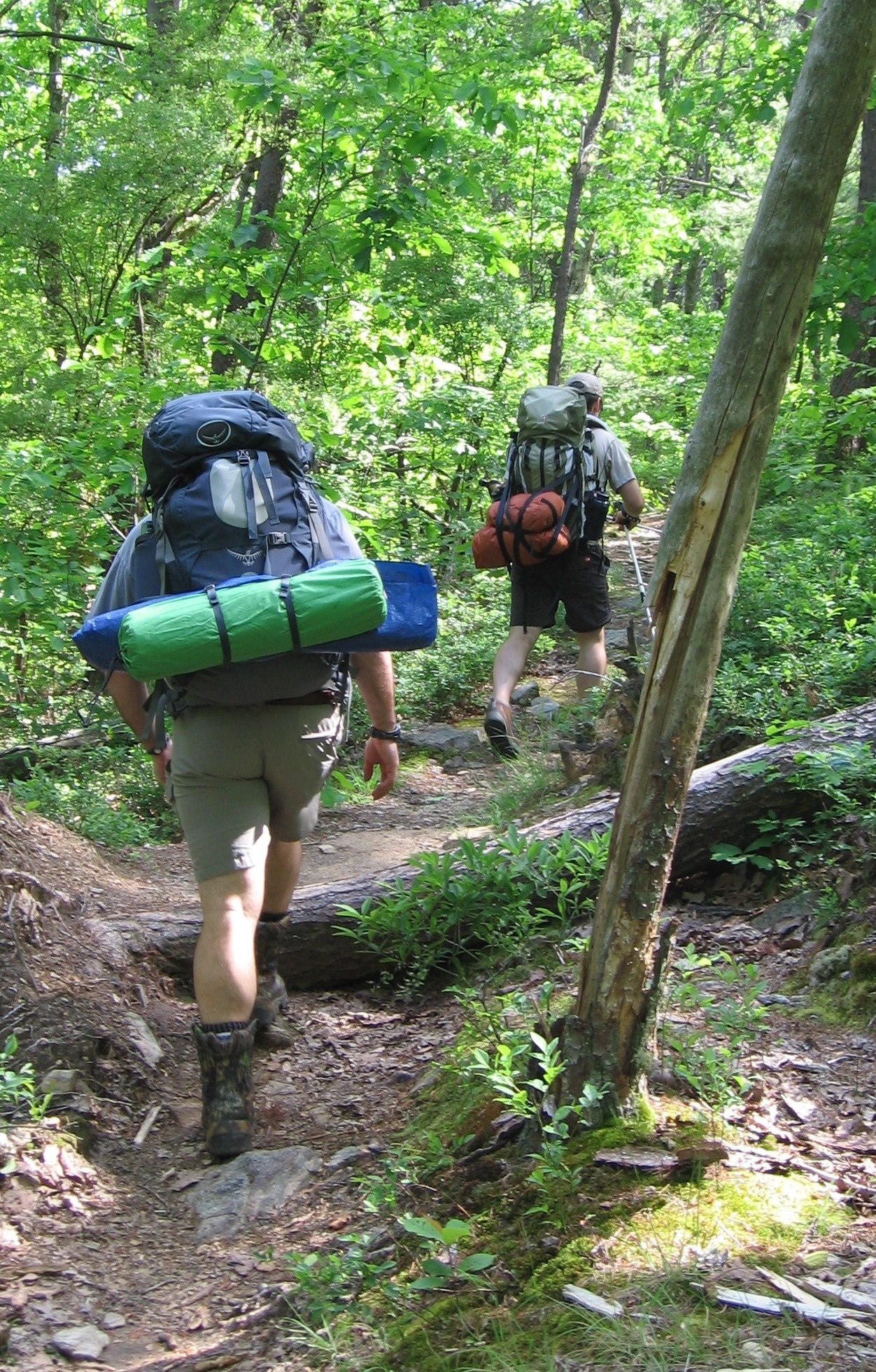
Backpacking on the Pinhoti Trail.

Backpacking on the Pinhoti Trail.

You get fresh air and great exercise while doing something fun like hiking, backpacking, mountain biking, kayaking or rock climbing.  For example, hiking is a great cardio workout. Add in a slightly rocky trail and a little elevation change, and you’ll really be burning the calories. Even more so if you are backpacking with 25 or so pounds of gear on your pack. It also gives your leg muscles a great workout. Plus, it just feels good to smell the fresh forest air, feel the sun on your skin and hear the leaves rustling through the trees. An extra bonus: exercising outdoors is much more scenic than a trip to the gym.

Time in the outdoors improves your mental health
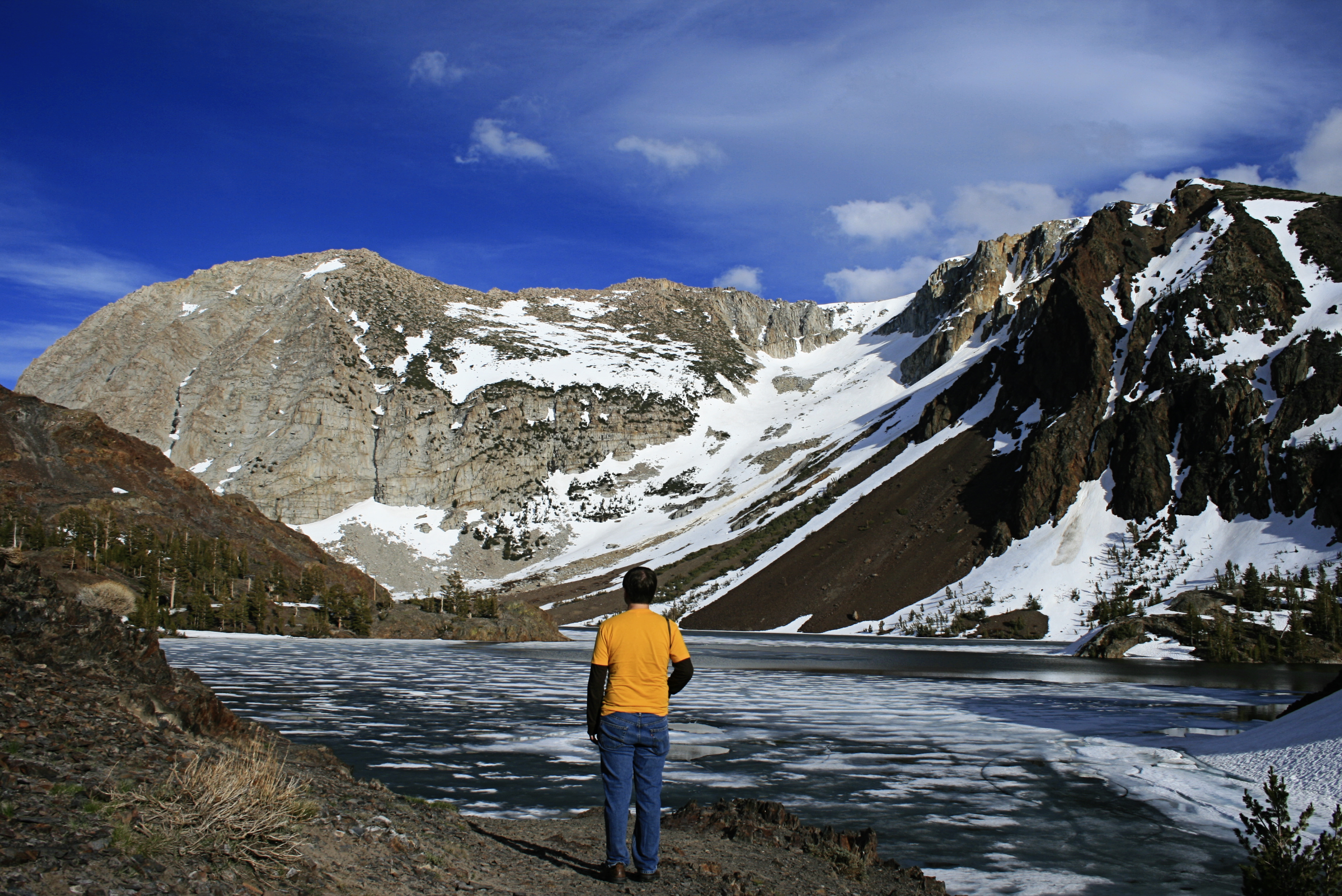
Spring in Yosemite National Park, California

Spring in Yosemite National Park, California

We are addicted to screens. Hardly 10 minutes goes by without me checking my phone for e-mails, text messages, Facebook notifications. We expect and are expected to be reachable 24/7. Add on top of that the normal stresses of everyday life, and if we are not careful we find ourselves in a tidal wave of trying to keep up. It can get exhausting and drain your mental energy by the end of the day.

Sometimes we need a break. Spending time in the wilderness offers a chance to temporarily unplug from the tide of social media and technology. There are no computers in wilderness areas. Cell phone service is often spotty at best so forget about checking Twitter or Facebook from your smartphone.  Instead we can go at a more measured pace, relieving stress and anxiety.

This study published in 2013 suggests that spending more time in nature and away from our computer screens, smart phones and tablets can actually improve attention span, problem-solving ability and multitasking ability.

Continue reading

Fellowship, fresh air and fun at Smith Mountain

The group from the day hike to the Smith Mountain area of Lake Martin on March 1, 2014

The group from the day hike to the Smith Mountain area of Lake Martin on March 1, 2014

We had a great start to our 2014 spring season with a day-hike trip to Smith Mountain fire tower area of Lake Martin on Saturday, March 1. The weather was just about perfect, and we had a great time of fellowship, fresh air, exercise and unplugging from our day-to-day lives to focus on God while enjoying His creation.The theme of the day was perspective. We shared and discussed several examples from the Bible of how God has a much greater perspective than our own. The whole experience served as a reminder to remember and trust in God’s perspective on our lives especially when we are faced with a challenge or struggling to see how he is working in our present circumstances.

Here is what one participant had to say after the trip that sums it up the best:

“We enjoy getting to know other fellow believers in Christ along with hiking through the beauty at Lake Martin. It is awesome to take time and enjoy the outside beauty created by our Lord. Like you said during one of your devotional stops during the hike, it is necessary for us to get away from the hustle and bustle of everyday life to reflect.”

Check out some more trip photos from hiker John Boyd.

Gaining a new perspective from the Smith Mountain fire tower at Lake Martin

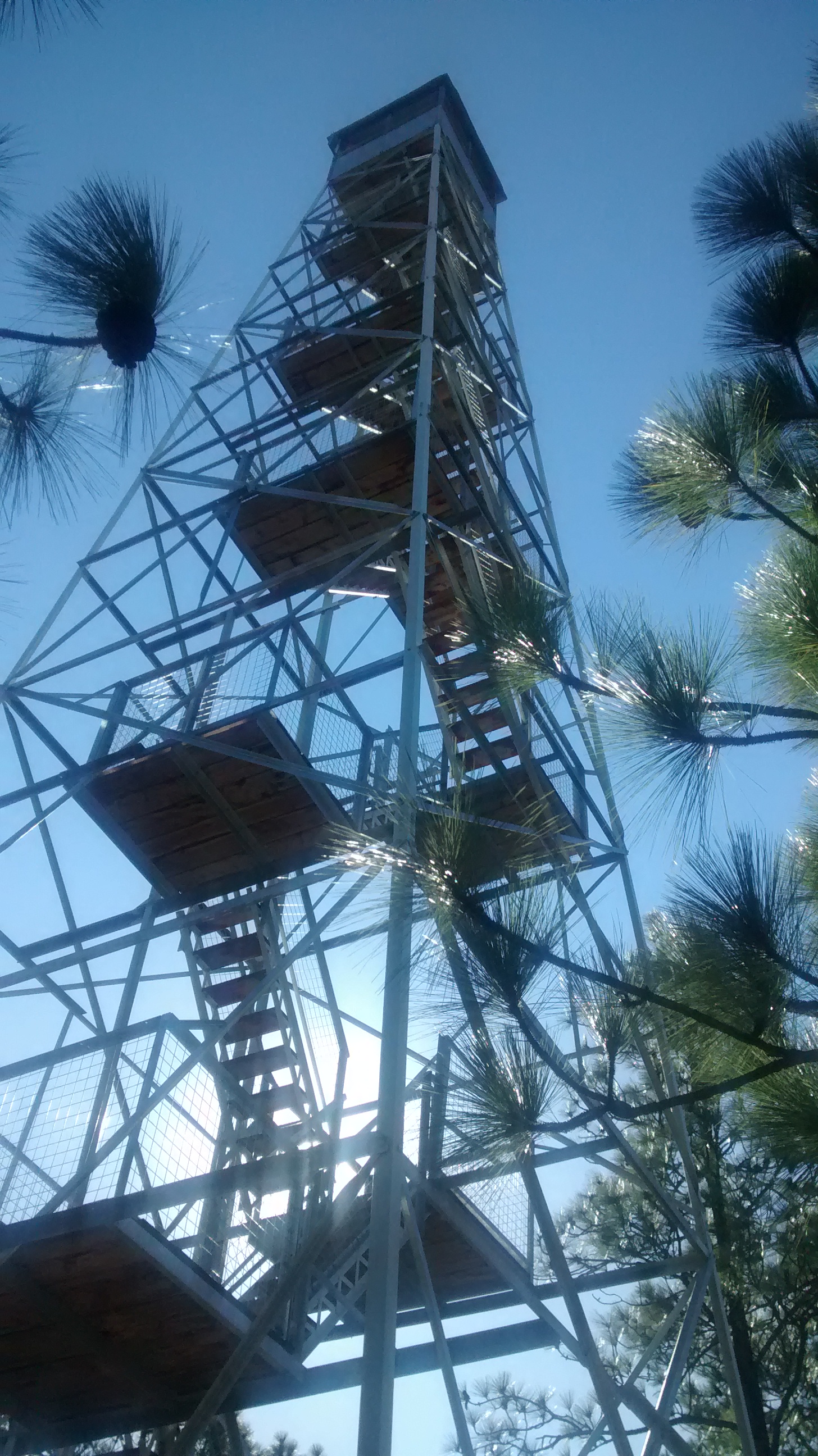
Climbing a 90-foot-tall fire tower in a cold, stiff January breeze was a tiny bit nerve-racking. But the spectacular view from the top made it well worth the effort and was highlight of our recent visit to Smith Mountain, the highest point along Lake Martin.

At the base of the 90-foot-tall Smith Mountain Fire Tower.

At the base of the 90-foot-tall Smith Mountain Fire Tower.

Reboot partner Chris Bowden and I spent one chilly Saturday morning exploring the trails around Smith Mountain in advance of our March 1 day hike trip.  Chris is the person who got me into backpacking a few years ago and has been an instrumental partner in taking Reboot from a prayer and idea into a reality. After spending a year in Kentucky, Chris and his family recently moved back to the Montgomery area and this was our first chance to hike together since his return.

After driving about an hour and a half from Montgomery, we arrived at the trailhead which is along the shores of Lake Martin west of Dadeville. Back in 2012 the Cherokee Ridge Alpine Trail Association, or CRATA, restored the fire tower and opened it to the public. This is the latest project for the group which has done excellent work over the past decade to bring quality hiking trails to Lake Martin.

We started by hiking uphill about a half mile to reach the base of the fire tower and remnants of some old buildings. Here is a little history behind the property from the CRATA website:

“Standing majestically atop Smith Mountain is the historic 90-foot fire lookout tower.  Erected in 1939 as a cooperative agreement between Alabama Power Company, Tallapoosa County Forest Conservation Association and the Alabama Forestry Commission, the tower was a sentinel for locating forest fires for 40 years.

Decommissioned in 1980, the fire lookout tower fell into neglect and disrepair.  The office building was dismantled along with other facilities.  The property (10 acres) reverted back to Alabama Power Company and had been abused by dumping for the last 30 years.”

In late 2010, Alabama Power deeded the land and tower to CRATA which worked to repair and restore it for visitors. They have done a wonderful job.

Continue reading