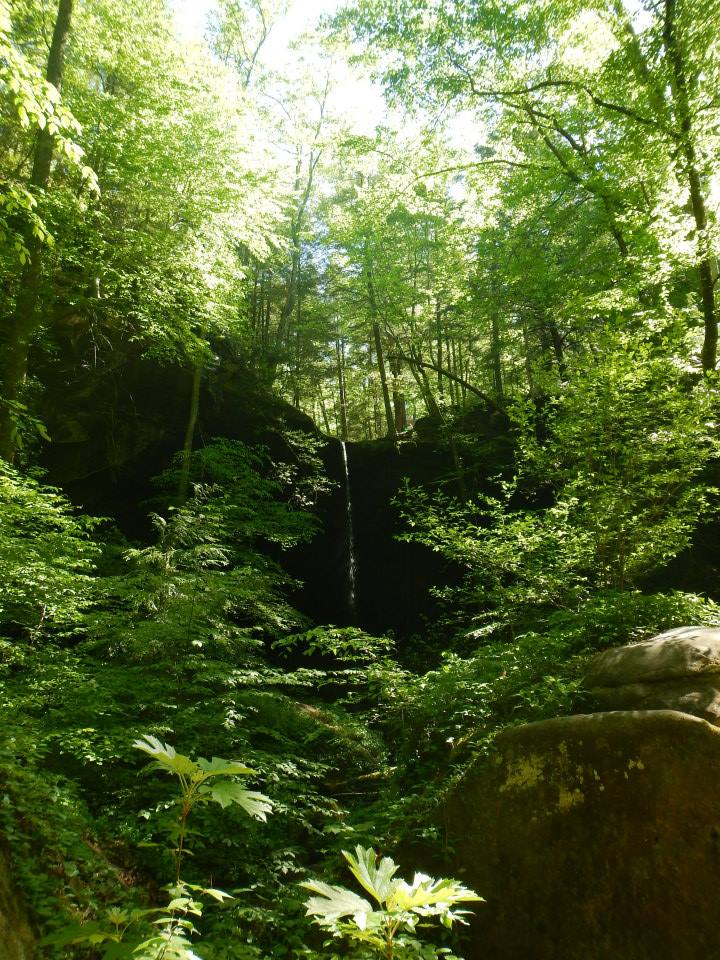
East Bee Branch Canyon
Magical. If one word could describe the feeling of entering the lush forest, steep canyons and clear streams of the Sipsey Wilderness for the first time, that’s it. There is just a special feeling about the place.
In early May, Reboot had the privilege of leading a group of guys on a 14-mile overnight backpacking/Bible study trip through the heart of the Sipsey Wilderness. The area, located in Bankhead National Forest in Lawrence and Winston counties, is named for the Sipsey Fork of the Black Warrior River. The Sipsey is Alabama’s only designated Wild and Scenic River and the wilderness area more than lived up to its reputation of a wonderland of waterfalls, clear blue waters, old-growth forest and towering limestone cliffs.
After a three hour drive from Montgomery, we arrived at our starting point: the Sipsey Picnic Area trailhead along Cranal Road. Our hike was a there-and-back trip to the East Bee Branch Canyon and the “Big Tree,” one of the wilderness’s most famous highlights.

Our group in front of the Big Tree.
Our path set out from the Sipsey Picnic Area trailhead along Trail 200/209 and crossed the clear and cold waters of Borden Creek to reach Trail 209 which follows the Sipsey Fork and would be our main trail for the hike. The slow flow of the Sipsey bluish waters was our constant companion once we crossed Borden Creek. Fall Creek Falls was an early highlight along with the sight of dozens of butterflies attracted to something left behind in a fire pit near the falls. The hiking was smooth with very little elevation change. The biggest challenge was navigating several tree blowdowns and hopping over the numerous streams that feed into the Sipsey.
Along the way, we stopped to discuss several Bible verses focused on the idea of journey because we were on our own 14-mile journey. The flow of the Sipsey is very dependent on rainfall which reminded me of the influence of Holy Spirit in our lives. In John 7: 37-38, Jesus equates the presence of the Holy Spirit in our lives to living water. Much like the flowing, rushing water moves through the Sipsey stream bed with purpose and direction after rains, we need the Holy Spirit to guide us to follow Jesus. But to really feel it and get all of the benefits of living within the Spirit we must feed it, encourage it and seek it. The more we do, the stronger a force it will be for Jesus in our lives.
On the last day, the climax of the festival, Jesus stood and shouted to the crowds, “Anyone who is thirsty may come to me! Anyone who believes in me may come and drink! For the Scriptures declare, ‘Rivers of living water will flow from his heart. – John 7:37-38 NLT
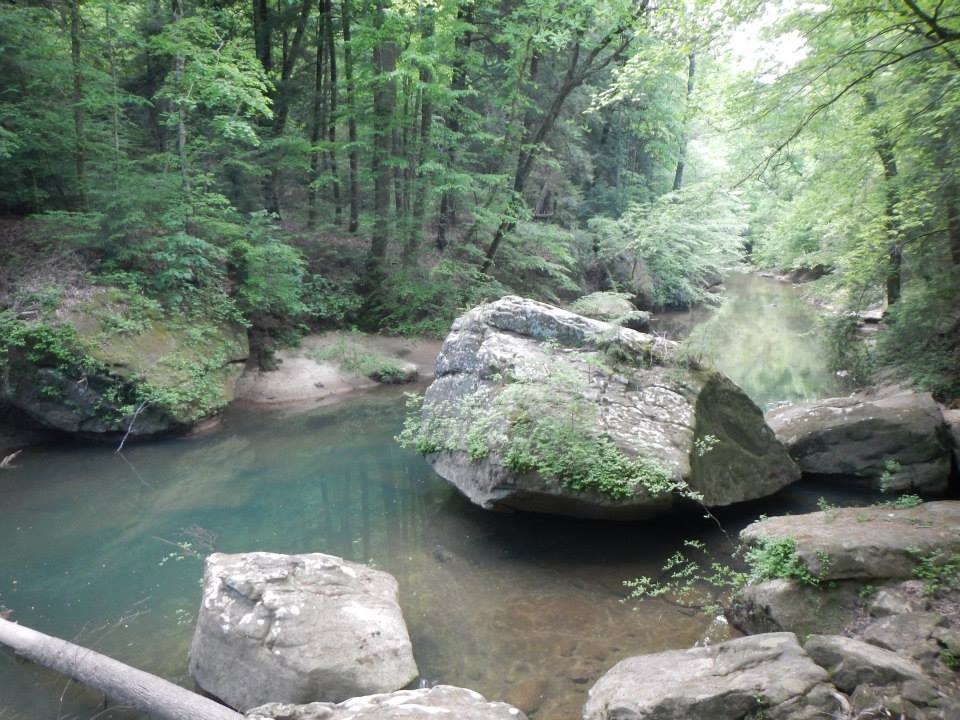
A classic scene along the Sipsey.
After about 7 miles we reached the Bee Branch and Trail 204a, an unmaintained trail that leads to the Big Tree area. A nice campsite along was already claimed, so we headed left down Trail 204a and found another good campsite right along the bank of the Bee Branch. After setting up camp and cooking a dinner of Conecuh Sausage, rice and pizzas, we settled in for a nice campfire devotional/conversation.
There is something unique and powerful about being out in the woods discussing the word of God with no cell phone service and no distractions. Our conversation continued the idea of a journey and focused on this question: Do we have the endurance trust Jesus, rely on the Holy Spirit and to finish the journey well through the ups and downs of life? A hike and an experience like this in the wilderness is a journey. It’s got a starting point and an ending point but the adventure is in the journey – what we see along the way, the conversations we have, where we camp, the unexpected views. A journey also has its ups and downs. We’re tired, weary, need rest at some points. It tests us, stretches us to our limits and pushes our endurance. We are stronger afterward, and we always take something back with us.

At the base of the Big Tree.
The feeling that we were somewhere special really came to mind on morning of day two, when after about 30-45 minutes of hiking, climbing and twisting through the trail along the Bee Branch we reached the highlight of the trip: the East Bee Branch Canyon and the Big Tree area. The tree is one of the largest tulip poplar trees in the Southeast and is surrounded by steep walls on three sides with two waterfalls and tons of old-growth forest all around. It was an incredible place to have an individual morning quiet time reading scriptures and praying. Once upon a time, you could pretty much drive a car up to the top of the amphitheater but now the area is only accessible by hiking at least four miles one-way. It’s a challenge to get there and you have to earn your way to this spot through Trail 204a which makes the canyon all the more special.
This trip easily left me wanting more. You could easily base camp near where we camped along the Bee Brach and explore the area’s many highlights for several days. We anticipate many more Reboot journeys here in the near future and we hope you will join us to explore this beautiful bit of God’s creation.
If you are interested in checking out the Sipsey for yourself, I highly recommend checking out the Sipsey Wilderness Hiking Club website. They’ve put together a great resource full of trail guides, trip reports and other important things you need to know before embarking on a journey to the Sipsey.


 Reboot Wilderness Adventures